
The End Of An Era: Mourning The Death Of My Dover Saddlery Catalog


By now the news of Dover Saddlery’s demise has infiltrated the feeds of equestrians everywhere. The longtime horse sport retailer announced last week that it was closing stores nationwide, and liquidating its inventory with going-out-of-business sales.
Across social media, there wasn’t a lot of love left for what has long been a staple in the horse shopping industry. In 2022, Dover announced it was acquired by Promus Equity Partners, LLC, a Chicago-based private equity company. Leaders from said private equity overlord at the time detailed in a press release that they were “not in the business of running companies, rather collaborating as active board members,” and were interested in charting the brand’s growth into the future.

Perhaps they did, in a short term. The following year, Dover announced it was open to franchise brick & mortar opportunities. In 2025, Dover began selling SmartPak supplements. Last summer, Dover made a big announcement: the company had committed to building a brand new 12,740-square-foot flagship store at the World Equestrian Center Ocala, in the recently debuted The Shoppes Off 80th.
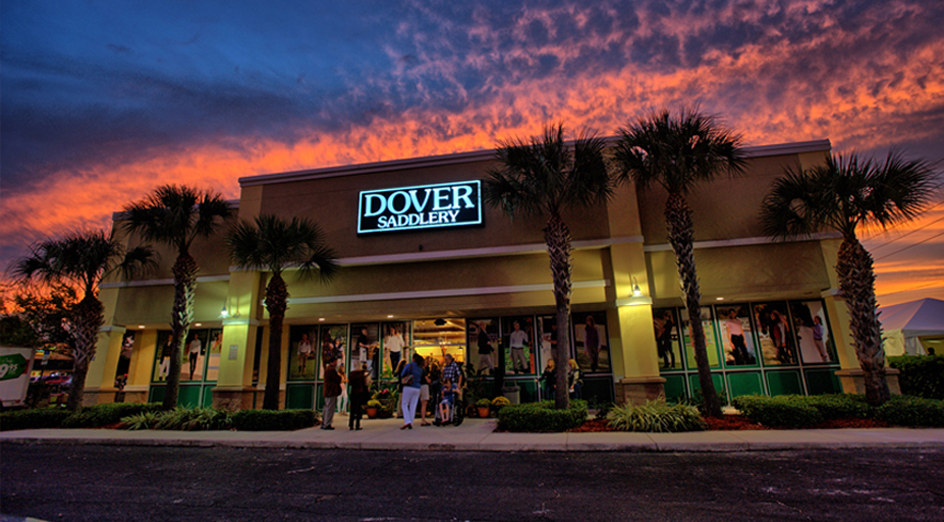
But in April, Promus Equity Partners offloaded Dover onto another private equity firm, Gordon Brothers, after its lender spun it off in a fire sale, reporting on the deal disclosed. Gordon Brothers, based in Boston, wasted no time in shuttering stores and sparking the going-out-of-business sales we’re seeing nationwide right now.
It remains unclear what will happen to that flagship Florida store. But if history is any indicator, the Ocala store was nothing more than a press release and some renderings (remember the very short-lived Dover store at Tryon International Equestrian Center?). We also don’t know what will happen to Dover’s web commerce platform, but all signs point to the end of Dover as we know it is near.
The rise and fall of Dover Saddlery is nothing special in the grand scheme of things – it’s been happening for years in the retail industry, as e-commerce platforms continue to outpace the brick & mortar format, especially with newer players, like Chewy, who are quicker to adapt to consumer preferences. And more recently, Dover is just another example of private equity’s invasive leech into so many industries these days – bleeding a business dry until there’s no equity left, and selling off the dry bones before the burial. It’s a simple yet well-known strategy straight out of the private equity playbook.
Posts across social media have condemned Dover and the suits that own it for leaving small businesses in the lurch. Clothing makers, saddle pad companies, boot designers and more sent inventory to be sold in Dover stores only for invoices to never be paid. That’s perhaps the saddest narrative of all in this story.
Through the anger and the disappointment is a sadness that lingers when I think of a world with no Dover Saddlery in it. Dover too, was once a small business, just a store for horse enthusiasts in Wellesley, Mass., started by brothers Jim and David Powers in 1975. It grew to become a household name. Small equestrian businesses could 100% say they’d made it when Dover chose to carry their goods in their stores and online.
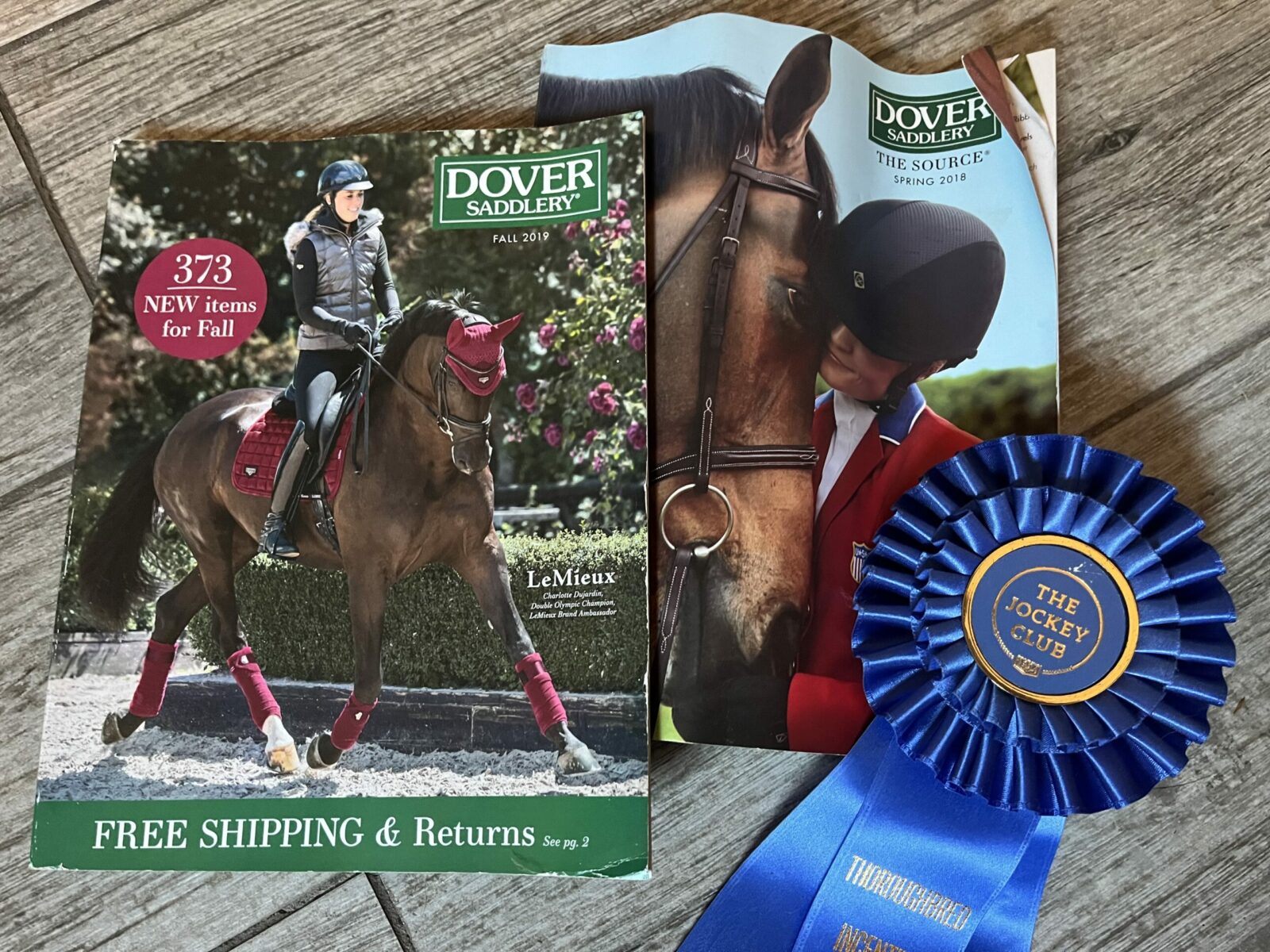
For many of us, it wasn’t the physical stores that bring back wholesome memories, but the catalogs. Thick, glossy pages with seemingly endless inventory of everything one could want or need for their horse obsession. Dover catalogs became the ultimate guide to my Christmas wish lists over the years. It was a good day when I found it in the mailbox. And as the brand moved away from printing, as much of the rest of the world did at that time, too, I found myself missing it.


I still have a stack of old catalogs. The latest are dated from 2017 and 2018. They still have images of Dover staffers on their own horses on the pages just behind the cover. Many covers were pinned up on my childhood walls and in the sacred spaces of the tack rooms I grew up in.
Before online tracking orders, I’d rush home from school and wait for the mailman, eager to see if they had a cardboard box with the green Dover Saddlery emblem stamped on it.
At horse shows, it was the ultimate compliment to be told my turnout was so good “I look like I walked off the cover of Dover.”
So while Dover’s demise couldn’t have come in a worse way, I’ll try to remember the brand for every great influence it had on me growing up. I’m glad Dover was there, and I know I’ll miss it.