
New Study Highlights Horse Welfare Through Perception Of Olympic Photos

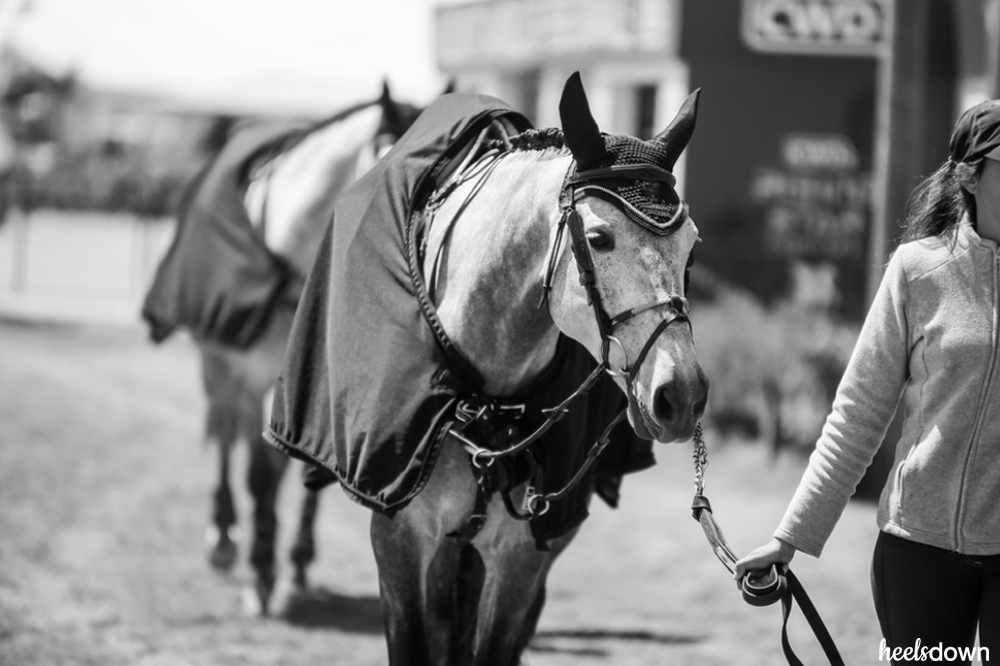

This time last year, a team from Hartpury University, EQuerry Co. and Via Nova Training set out to understand how images of equestrian competition impacted the overall perception of horse sport.
Show jumping, three-day eventing and dressage have been included in the modern Olympic Games since the 1900s. But the conversation around ethics, welfare and general public perception of the treatment and care of horses in sport have never been more critical than it is today.

Researches aimed to explore how people perceive images of horses in Olympic sport and sought out responses from people who identified as equestrians themselves. Participants took part in a survey where their responses were collected and reviewed.
Fast forward a year later, and EQuerry Co. has shared what they found.
More than 500 people ranked images they saw from the Paris 2024 Olympic Games, responding to a series of open-ended questions. Researchers then explored that feedback and how participants interpreted what they saw.
The images included 4,774 shots from Games, both in competition and behind the scenes environments. About 30 of those images were embedded within the online survey. The results were published last month in the Journal of Physical Fitness, Medicine & Treatment in Sports.
The analysis concluded that participants in the study did not engage with Olympic equestrian imagery as “neutral spectators of sport, but as evaluators of welfare, ethics and legitimacy,” the study read. “Across disciplines, interpretations of ‘positive imagery were shaped by perceived horse comfort, human attentiveness and the boarder moral framing of elite equestrian practice.”
Among the findings was a strong agreement in what made a “positive” photo stand out. That included images which showed a horse and rider “in balance” and with “soft aids.” The images that received the most positive responses focused on visible expressions of care, gratitude and partnership, the study said. Often, the images displayed a rider praising or petting the horse after performance. Horses that carried themselves in a relaxed way – ears forward, eye and jaw relaxed, movement balanced – also rose to the top of positive marks.
Poor equitation, including a loose lower leg position on the rider, leaning and spur contact on a the horse’s barrel, evoked a less positive response. Some respondents expressed concern over equipment, such as double-bridles, signs of strong contact on the bit and tight nosebands. Any images that showed horses in tension or discomfort were also marked less positive.


Participants in the study seemingly understood the limitations of still photography, with many noting that images represent “only a moment in time.” But this did not however reduce the ethical weight attributed to the photos in most cases.
EQuerry Co. likened the responses to the images to signaling to a larger cultural shift in equestrian sports: “welfare issues are no longer seen as isolated ‘bad apple’ incidents.” But instead, pointed toward growing systemic pressures in the sport like evolving judging standards, equipment norms and breeding for ‘extreme movement.’
EQuerry Co. makes the connection that the results of the study mirror what horse sport governing agencies are contending with right now, when it comes to perception and welfare in the sport. The FEI Equine Ethics and Wellbeing Commission, for example, is discussing the future of the sport and its role on providing structural responsibility, rather than continuing to rely on individuals.