
Is It Kissing Spines Or Are You Just A Bad Rider?


By Laura Reiman
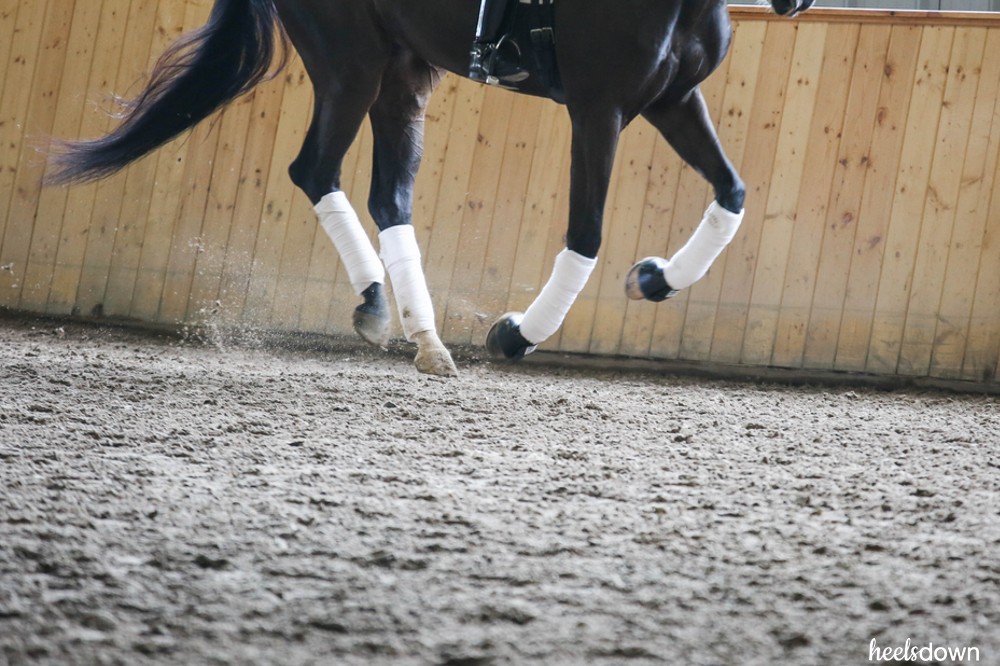
“Is it kissing spines or are you just a bad rider?” Someone I follow on Instagram posted this years ago, and it’s passed through my mind often in the years since. Many of us, especially those who fall in love with an off-track Thoroughbred, have to deal with a horse with back soreness. Sometimes it’s as easy as a saddle fitting, sometimes it’s shoes, a fitness program, ulcers.

And sure, it’s also about the way we ride. But then there are some cases that just can’t find resolution.
I had been looking for a horse for what felt like eternity when I finally found a green but agreeable 5-year-old OTTB that had just enough training to feel manageable for me. Between pressure from my trainer and fatigue from the search, I was pretty much sold before the pre-purchase exam. The findings were all normal except one red flag – back soreness. I’ve passed on horses for various reasons after a PPE, however this time I “girl-mathed” my way into reasoning it was the CWD saddle on a horse two months off the track, already signed up for an USEA Novice-level event. I asked the owner/trainer to give the horse a week or two off and we would reassess. My “reassessment” was to run my fingers down the horse’s spine and when he didn’t react, I signed a check and took my new guy home.
We got about three months of fun before everything started crumbling. I was in a training program taking two lessons a week, lunging once, trail riding one or two times, and doing light solo rides and groundwork. Even though I felt I was doing everything right, my horse started showing signs of something being off. My trainer said I probably just bought a bad horse that was only good for the trails, but I knew in my heart he was capable and just fighting some sort of physical issue – so I called a vet.
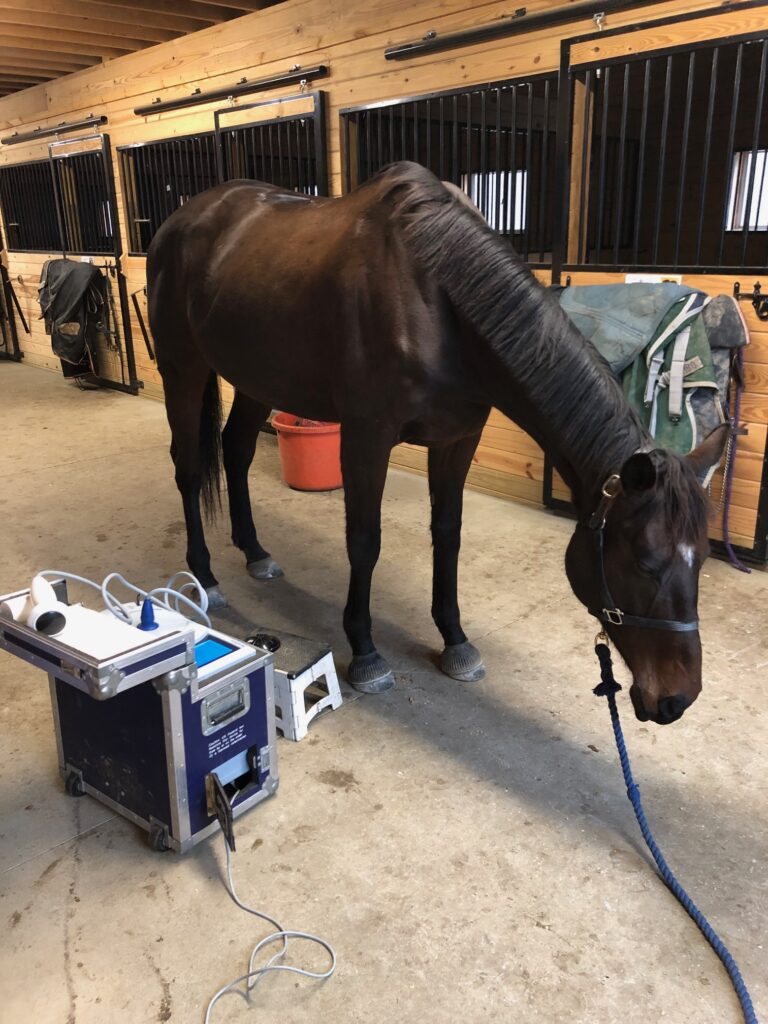
The first vet couldn’t find anything wrong. Then I called an FEI vet who came out with lameness sensors and declared there was something wrong, but she couldn’t figure out what. I posted a video to The Chronicle of The Horse forums and someone mentioned EPM but when I asked my vet to check him, they said it wasn’t worth it because most horses in Maryland test false-positive. I took him for a nuclear bone scan. The only thing that popped up was mild changes in the spine that were almost kissing spines, but not quite a diagnosis. They told me his issues were probably related to these findings and the most important thing about back pain is to keep moving – a strong horse is a healthy horse. I bought an Equiband and a book about core engagement and stretches and we started going on hand walks on the trails and doing carrot stretches.
Something still wasn’t right, so I had another vet out and she recommended we test for EPM which ended up being a high positive. We treated, and I had my horse back. Then he backslid, and we treated again. I ended up getting dramatically kicked out of the barn for keeping my horse alive, which the farm owner felt was abusive (the vet continuously reassured me that my horse’s condition was treatable and that he would be ok. She came out at least once a week if not more to check him.)
I moved to a new barn with a classical dressage trainer and after a third round of EPM treatment, we were ready to work again. This trainer spent a lot of time holding my horse together as he moved through his work. The trainer was a very strong rider and could get my horse to technically do all the movements, but not necessarily by being “through” the body. In other words, he wasn’t really using his back and hind-end properly. I could not recreate this at all, and so we worked in a vicious cycle of training rides that seemed to fix things and then lessons that broke them again. I did what I had power over, which was hire body workers, study ground work and gymnastics, and buy wellness tools like red light systems, massage guns, gua shas, heart-rate monitors – the works. I got so well-versed in these movements that I wrote a book called Pilates for Horses. It was around this time that I also started to learn about being my horse’s advocate and asking questions to try and educate myself at vet visits.
I eventually left that barn because I wanted to learn to be a productive rider for my horse. He had also had a few bouts of extreme high temperatures and some strange lameness issues, and I wanted to explore different environments. I found a home with sympathetic trainers that finally helped me ask my horse to use his own body instead of relying on the rider to hold his hand so heavily. That’s when his body started falling apart. We would be moving along the rail in perfect harmony and my horse would drop his back and crow hop out of nowhere. He would bolt from a complete relaxation state. Some days he would come out like Mr. Jekyll, some days Hyde. I started to become scared of which horse I would have each day.
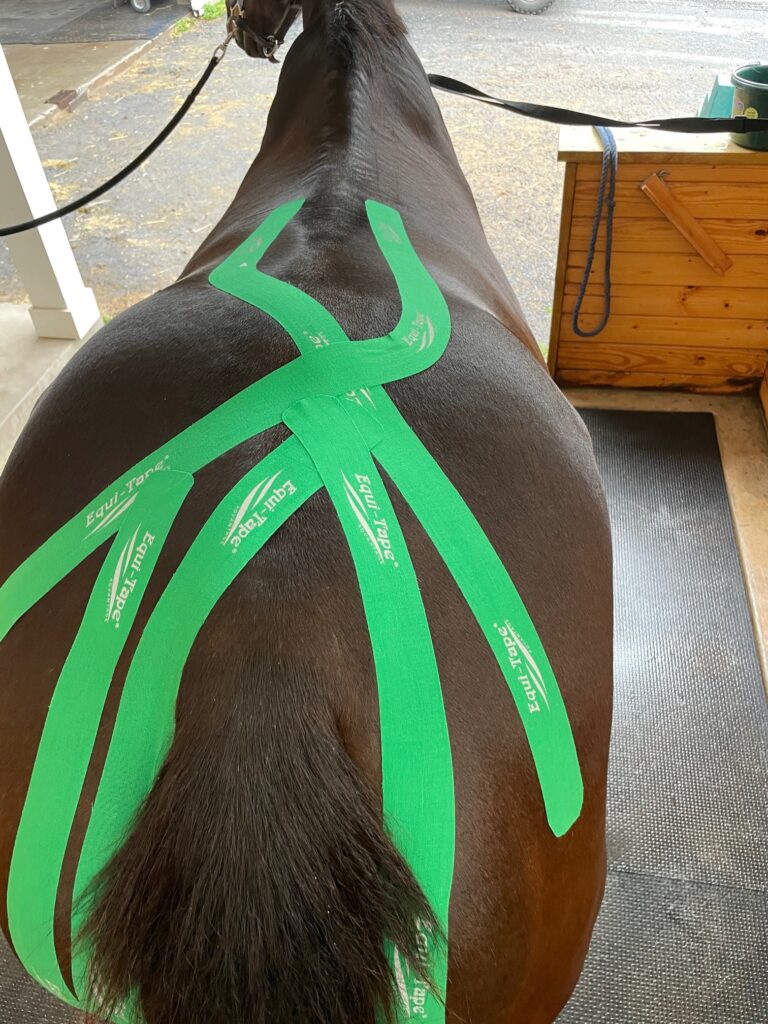
I called out renowned vet after renowned vet. First a neurologic specialist and then a high-performance sports vet that was convinced everything was stemming from good old fashioned back pain. We did round after round of shockwave, we did mesotherapy to calm the surface of the back, we did muscle relaxers like Roboxin, we did acupuncture, chiropractor, PRP, steroid injections, pads on all feet, and specific ground work. We worked with a cowboy to try and ease his fear state. I hired an equine nutritionist and painstakingly made supplement baggies every week of gut and joint supporting powders. We tested and treated for ulcers. I bought extremely expensive saddles out of desperation. I tried some time off, and I tried professional training rides only. Sometimes I would have my horse back for a few glorious months that made it all worth it, and then a flaming dragon would reappear on a random day.
We continued to get various other diagnoses like poll pain and SI arthritis. Every inch of that horse got injected. Then, we hit a wall. After a promising round of injections I had an amazing ride in an outdoor arena and on the way back to the barn, my horse reared up, dumped me, and then rodeo-bucked in place for 5 minutes before running off. Getting reared off and kicked at was my breaking point. My trainer was also starting to feel uncomfortable riding my horse so I decided to send him to bootcamp to rule out behavioral issues. I took video to send to a trainer I very much respect and she thought he was lame. After so many years of battling, I decided it was time to call it. The problem was, he was young and athletic and sometimes even difficult to handle on the ground, so I chose euthanasia. It was an extremely hard and painful decision, but I was resolved in ending both our pain and making sure he didn’t end up in a bad situation.
Two months later I went out and purchased his exact opposite, a 4-year-old Irish Draught mare. Hardy, durable – not Thoroughbred. I loved her but she wasn’t my guy. I had a bad fall one day resulting in a need for wrist surgery and decided I’d lost my spark. I sold her on to a really lovely home and picked up golf. I got into the new sport with the conviction I had with horseback riding, trying to fill an unfillable void. This led to some pretty severe back pain pretty quickly. I ignored the back pain, as one does, until one day I woke up in intense pain and neurologic symptoms with the complete inability to flex and lift my right foot.
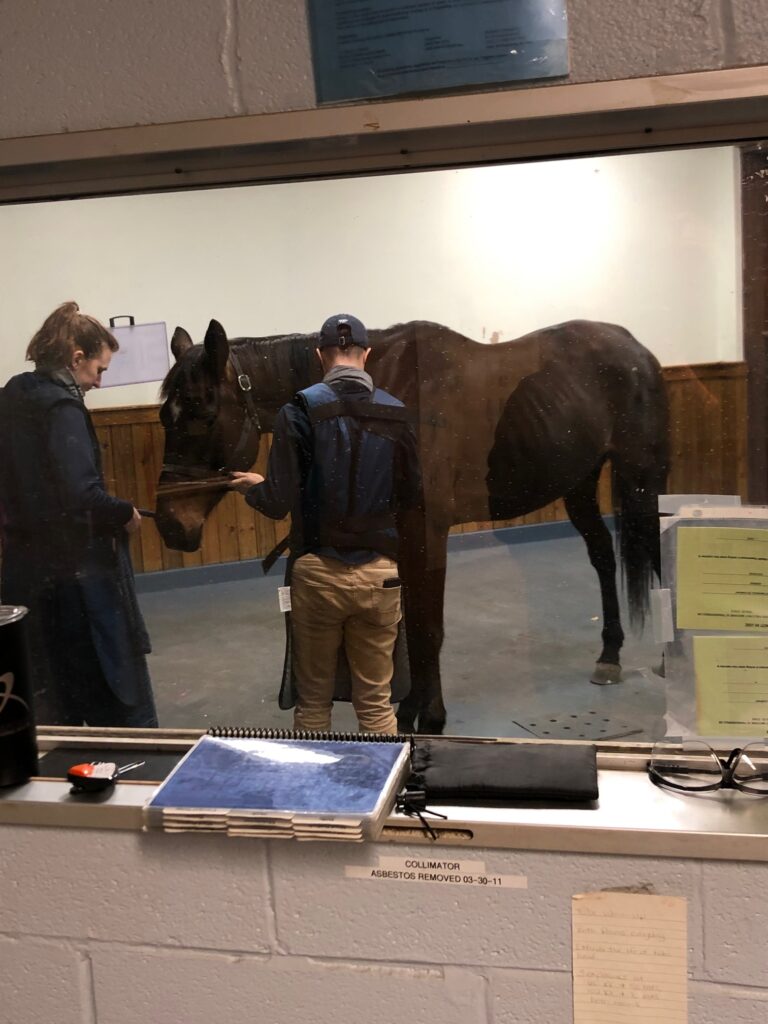
I started with a regenerative sports medicine doctor who thought I might have tendinosis in my glute. He gave me an injection of lidocaine as a diagnostic tool (sound familiar?) and a referral for an MRI. I cannot stress this enough – do not get images of your spine as a horseback rider. My images showed chronic degenerative changes throughout the lumbar spine (low back), stenosis, three herniated discs, some arthritis, loss of height, nerve root compression, a random fragment just hanging out, and a few other lovely notes. I was referred to a spine surgeon who promptly told me I needed surgery and could try steroid injections first but that the neurologic issues may already be permanent. I’m 37. I was prescribed muscle relaxers, NSAIDS and Gabapentin. I took Advil.
I didn’t like what that doctor said so I found a different doctor, out of pocket, who injected me with epidural steroid shots on the spot and recommended more nerve testing and X-rays. He also recommended surgery. I tried a different doctor, all while seeing four different bodyworkers and physical therapists, all out of pocket. I had exhausted my in-network physical therapy options and as a movement professional myself, was not satisfied with the level of care.
I can fully admit that jumping from doctor to doctor, just like I did with vet after vet, creates a lack of continuity in care and its own set of problems. I tried to separate the doctor from what they suggested because I didn’t want to discount a professional telling me a hard truth, however every doctor had a different opinion. I then saw two different neurosurgeons who felt I would be OK and to give my nerves time to heal. Nerves are resilient, both doctors said, but need time. I kept getting conflicting advice on resting versus moving.
One of the doctors recommended PRP, a procedure I did for my horse where blood is taken, spun in a centrifugal force machine and then re-injected. This causes inflammation in the body and promotes your own cells to work in overdrive to fight it. The next doctor said there was no literature to support this for the spine and it’s out of pocket, so don’t waste my money. Several doctors disagreed about which herniation was causing my foot drop and pain and where they would do injections. How do you pick a doctor and what advice to follow? Most of the doctors have looked at me with astonishment that I’m walking around with the spine that I have at my age, and have said that the only thing keeping me afloat is my core.
The one constant recommendation has been to do what feels good. But, as horseback riders, sometimes we are used to pushing through pain – I cannot trust my body to tell me something is wrong until I’ve pushed too far.

I’ve been desperate to find something to fix myself without surgery, just like I did for my horse. I purchased an acupressure mat. I upgraded to an acupressure mat with red light. I tried KT tape. I bought a yoga wheel. I go for weekly massages. I go to the pool and walk laps for 20-30 minutes. I sauna and/or hot tub. I take magnesium and vitamin B. I bought an Oura ring to track stress. I drink green and turmeric tea and try to eat an anti-inflammatory diet. I do light core engagement and breathing.
And what I’ve learned is this: I should have given my horse time.
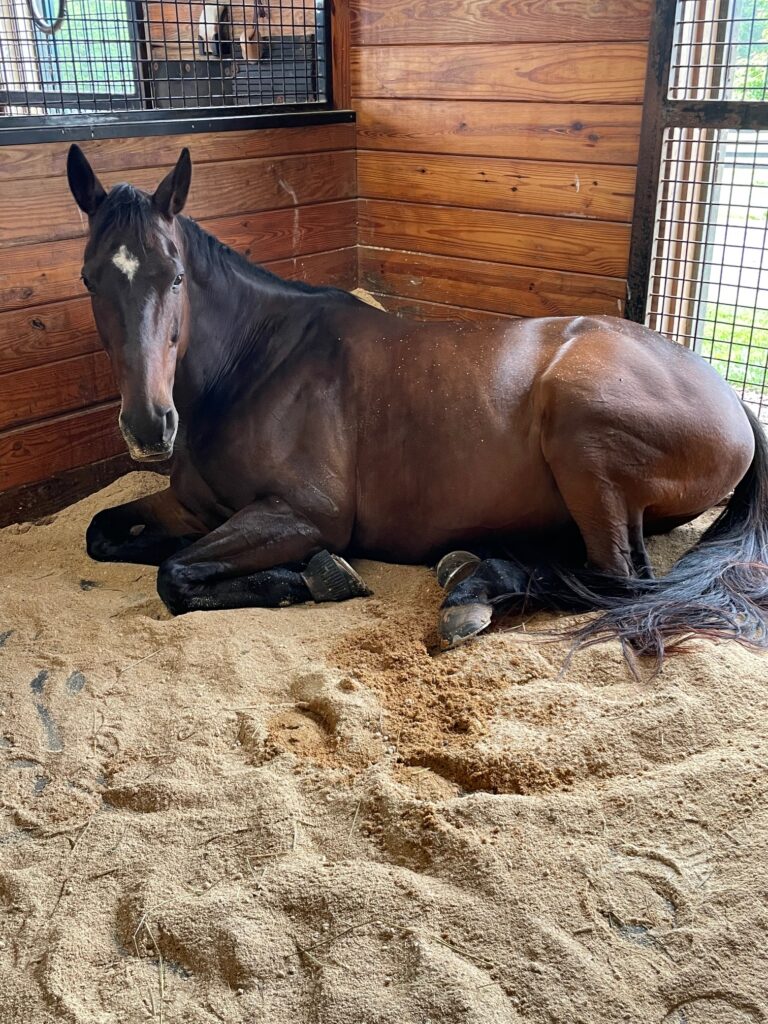
Time off to relax and recover and let his nervous system reset. Pain rewires the brain and takes time to undo. Maybe the EPM, or the meds that treated it, or any number of things damaged nerves that needed time to heal. Every vet told me to keep my horse moving and working and that a strong core and a stretchy back was essential to his recovery. I should have kept his weight down (I was proud albeit annoyed every time someone asked if my Thoroughbred was a Warmblood).
I should have. I could have. These are the things that go through my mind.
Every day I try to assess if I feel better, worse or the same. I can feel my body shift into compensatory patterns. I feel my brain seize up and be fearful of touch and movements that might cause pain. I am changed, and it will take time to put the pieces back together.
If I had my horse back, there are so many things I would do differently, starting with rest. Questioning the vet recommendations instead of just going with them. Weighing options. Fewer injections. But how do you get a horse to rest? How do you ask them what hurts? Is it the feet, the hocks, the gut?
At the end of the day, is it the back or maybe, is it the riding?
Laura Reiman, MS, NPCP-CPT, is the owner of The Pilates Powerhaus in Alexandria, Virginia, and author of ‘Pilates for Horses’. Follow for more tips on Instagram at @Pilatesforhorses or online at Pilates4horses.com